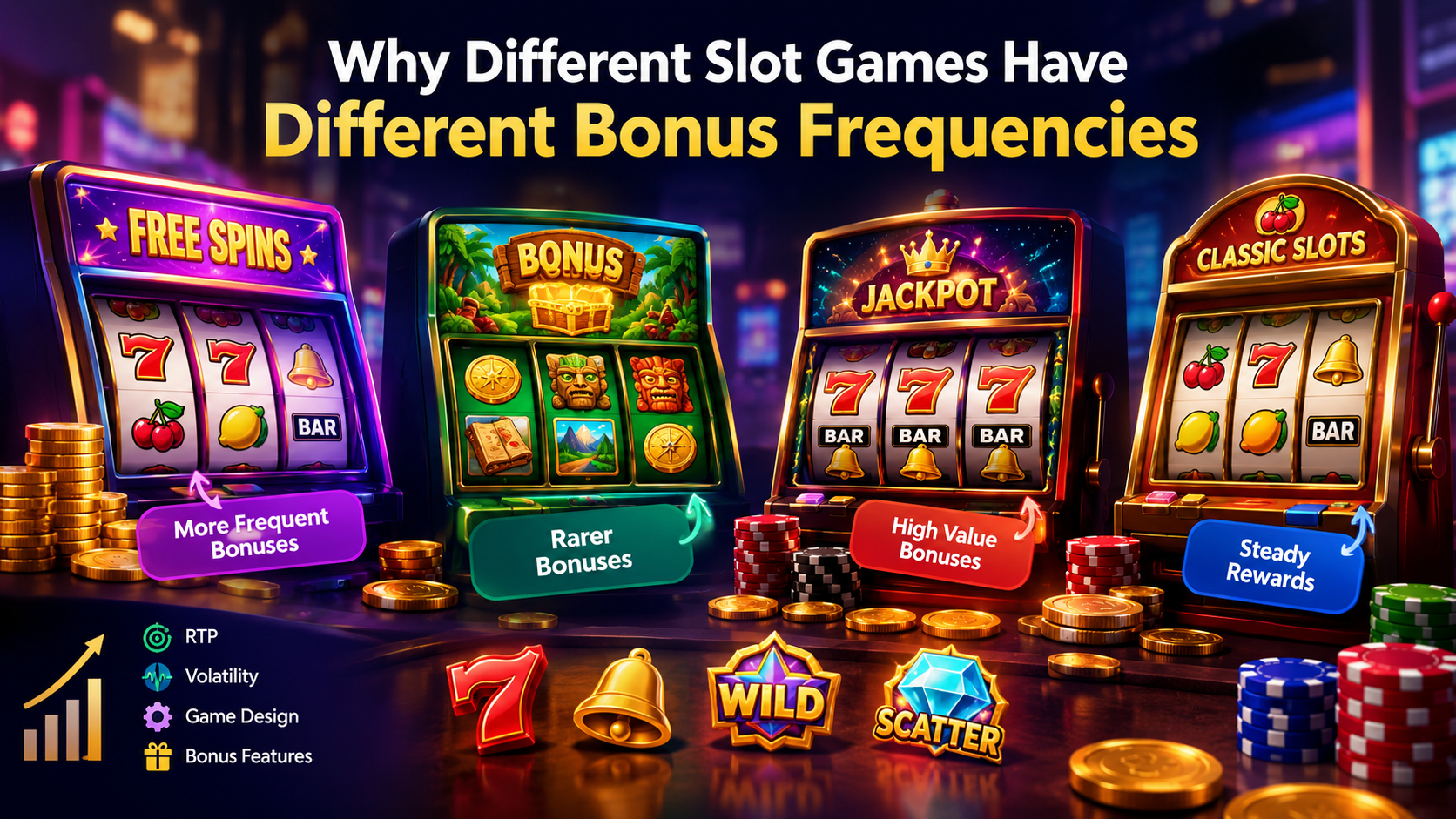
Slot games may look similar on the surface, but every title is built with its own mathematical model. One game may trigger free spins every 40–50 spins, while another could make players wait much longer before a bonus feature appears. This isn’t a software issue or a sign that a game is “cold.” Instead, it is a deliberate part of the game’s design.
Understanding why different slot games have different bonus frequencies helps players choose games that match their preferences and bankroll. Whether you enjoy frequent small rewards or prefer chasing larger bonus rounds, knowing how bonus mechanics work makes the experience much clearer.
If you’re exploring modern casino games through a trusted online casino platform, understanding these mechanics can help you compare games more effectively before you start playing.
What Is Bonus Frequency?
Bonus frequency refers to how often a slot game activates its special features. These features can include:
- Free Spins
- Pick-and-Click Bonus Games
- Expanding Wilds
- Multipliers
- Cascading Bonus Features
- Progressive Jackpot Rounds
Every slot has unique programming that determines how frequently these features appear. The outcome of every spin remains random, but the game’s mathematical model controls the long-term probability of bonus activation.
Game Volatility Plays the Biggest Role
The biggest reason bonus frequencies differ is volatility, sometimes called variance.
Low Volatility Slots
These games are designed to reward players more frequently with:
- Regular small wins
- Frequent bonus features
- Lower prize amounts
- Longer playing sessions
Many casual players enjoy these games because there is more continuous action.
High Volatility Slots
High volatility games work differently.
They usually offer:
- Longer gaps between bonus rounds
- Larger potential payouts
- Bigger jackpots
- More risk during gameplay
The bonus rounds may feel difficult to trigger, but they often carry much higher winning potential. Regulators and industry guidance distinguish volatility from RTP—volatility affects how wins are distributed, while RTP describes the long-term average return.
RTP Does Not Determine Bonus Frequency
One common misconception is that a higher RTP automatically means more bonuses.
That isn’t true.
For example:
- Slot A may have 96.2% RTP
- Slot B may also have 96.2% RTP
Even though both return the same percentage over millions of spins, one game might trigger free spins much more often, while the other saves more of its payout potential for rare but larger bonus rounds. RTP and volatility are separate characteristics of a game’s design.
Bonus Features Are Part of the RTP Distribution
Game developers decide how much of a slot’s overall payout will come from:
- Base game wins
- Bonus rounds
- Jackpot features
- Multipliers
Some games dedicate a large percentage of their payout to bonus rounds.
This naturally makes those bonuses less frequent because they often carry greater value.
Other games spread rewards more evenly across regular gameplay, allowing bonus rounds to appear more often but with smaller average prizes.
Theme and Game Design Influence Bonus Frequency
Modern slot developers build games around different experiences.
Adventure-themed slots often include:
- Multiple stages
- Story progression
- Rare feature unlocks
Classic fruit slots usually focus on:
- Simple gameplay
- Frequent small wins
- Fewer bonus mechanics
Megaways™, Hold & Win, and cluster-pay slots also use unique mathematical models that influence how often bonus rounds occur.
This explains why two visually similar games may feel completely different.
Progressive Jackpot Slots Trigger Bonuses Less Often
Progressive jackpot games are another good example.
Because these games offer extremely large potential prizes, developers reduce the frequency of jackpot-triggering bonus features.
Instead of frequent rewards, the game concentrates more value into rare events.
That balance helps maintain the game’s overall payout structure over the long term.
Random Number Generators Keep Every Spin Independent
Every licensed slot uses a Random Number Generator (RNG).
The RNG ensures:
- Every spin is independent
- Previous results do not affect future spins
- Bonus rounds cannot become “due”
- Losing streaks do not increase the chance of triggering a feature
Although some games statistically trigger bonuses more often than others over millions of spins, no individual player can predict exactly when the next feature will appear.
How to Choose the Right Slot for Your Style
Rather than looking only at jackpots, consider the following factors before choosing a slot:
- RTP percentage
- Volatility level
- Bonus frequency
- Feature variety
- Betting limits
- Overall gameplay style
Players who enjoy longer sessions often prefer lower-volatility games with frequent features.
Those comfortable with higher risk may choose games where bonus rounds appear less often but have larger payout potential.
Final Thought
Different slot games have different bonus frequencies because every title is built around a unique mathematical model. Developers balance RTP, volatility, hit frequency, and feature design to create different gameplay experiences. Some slots are designed for regular entertainment with frequent bonuses, while others focus on larger but rarer rewards.
Understanding these differences helps players make more informed decisions instead of relying on myths about “hot” or “cold” machines. When comparing games, always look beyond flashy graphics and consider how the game’s mechanics fit your preferred style of play. For players interested in exploring a wide variety of casino titles, browsing a trusted online casino platform can make it easier to compare different slot experiences.
FAQs
1. Why do some slot games trigger bonuses more often?
Different games use different mathematical models. Lower-volatility slots generally trigger bonus features more frequently, while higher-volatility games reserve more value for rarer bonus rounds.
2. Does a higher RTP mean more free spins?
No. RTP measures the long-term expected return of a game, while bonus frequency depends on the game’s design and volatility.
3. Can players predict when a bonus round will appear?
No. Licensed slot games use Random Number Generators (RNGs), meaning each spin is independent and bonus triggers are random.
4. Are progressive jackpot slots less likely to trigger bonuses?
Often, yes. Because they offer the chance to win very large prizes, progressive jackpot slots generally feature less frequent bonus rounds.
5. What should I check before choosing a slot game?
Compare RTP, volatility, betting limits, available bonus features, and the overall gameplay style to find a game that matches your preferences.