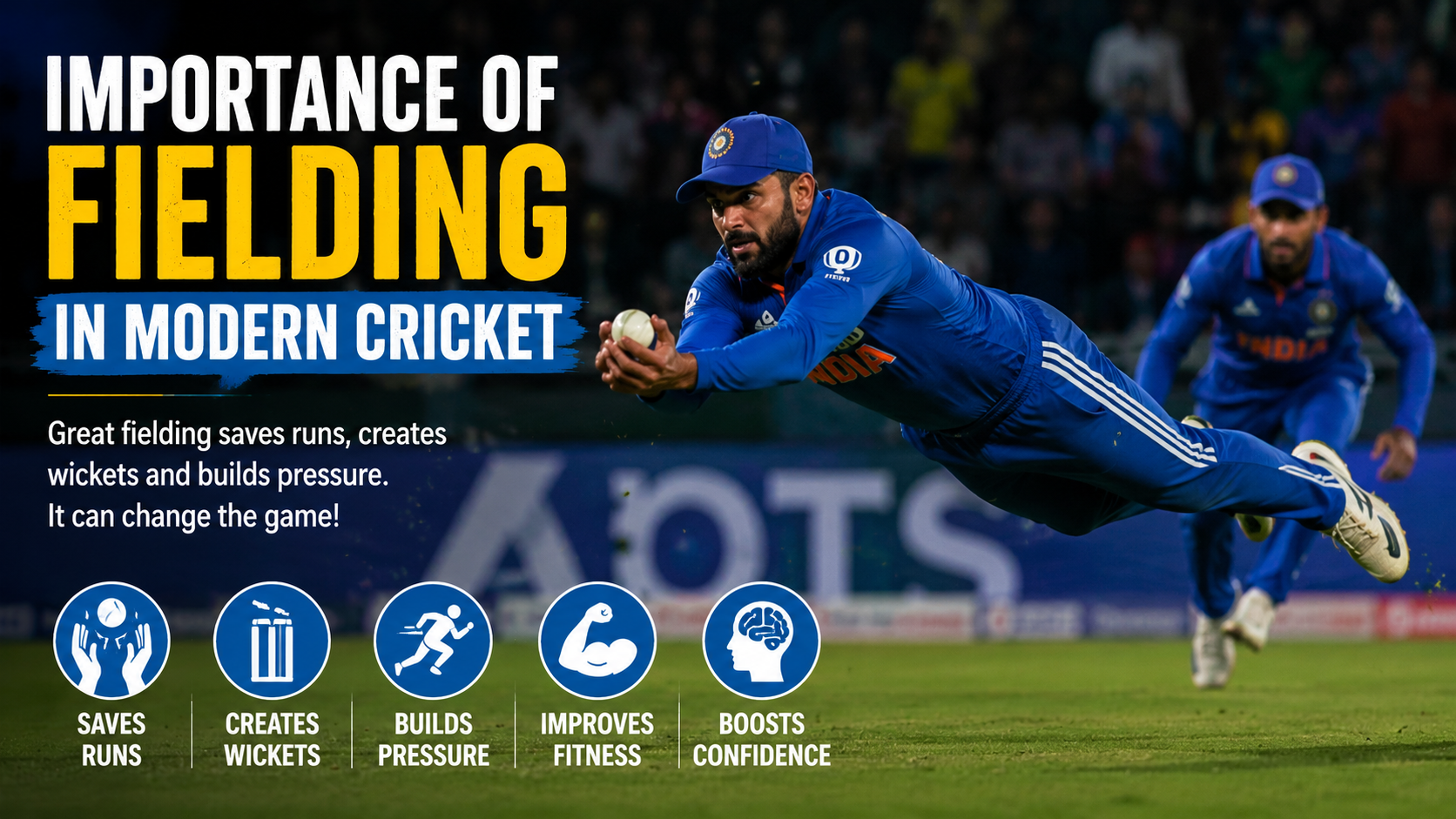
Importance of Fielding in Modern Cricket
Cricket has changed dramatically over the last two decades. While batting and bowling continue to dominate headlines, fielding has become one of the most decisive factors in modern cricket. In today’s fast-paced game, especially in ODI and T20 formats, a brilliant catch, direct-hit run-out, or boundary save can completely change the momentum of a match.
Modern teams no longer view fielding as a supporting skill. Instead, it is considered an essential component of success. The best teams in world cricket consistently maintain high fielding standards because they understand that every run saved can be as valuable as a run scored.
How Fielding Has Evolved in Modern Cricket
In earlier generations, cricket primarily revolved around batting and bowling. Fielders were expected to stop the ball and return it quickly, but exceptional athleticism was not always a requirement.
The introduction of limited-overs cricket transformed this mindset. As scoring rates increased, teams realized that fielding could directly influence match results. The rise of T20 cricket further accelerated this evolution, demanding faster reflexes, better fitness, and exceptional athletic ability.
Today, players spend countless hours practicing diving stops, relay catches, direct hits, and boundary-saving techniques. Modern cricket has raised fielding standards to unprecedented levels, making it one of the most important aspects of the game.
Saving Runs Is Equivalent to Scoring Runs
One of the biggest reasons fielding is so important is its ability to save valuable runs. In close matches, the difference between victory and defeat is often just a few runs.
A fielder who prevents a boundary, converts a four into a single, or executes a quick throw can significantly impact the final result. In T20 cricket, where matches are frequently decided in the final over, every saved run matters.
Elite fielding units create constant pressure on batting teams by restricting easy singles and forcing batters to take risks. This pressure often leads to mistakes and wickets.
Fielding Creates Wicket-Taking Opportunities
Fielding is not just about preventing runs; it also creates chances to dismiss batters.
Sharp catches, direct-hit run-outs, and quick reactions in the inner circle can instantly shift momentum. Many partnerships that appear dangerous are broken through outstanding fielding efforts rather than bowling brilliance alone.
Modern fielders are trained to anticipate situations, react quickly, and execute under pressure. As a result, fielding has become a major wicket-taking weapon for successful teams.
The Role of Fitness in Fielding Excellence
Fitness is the foundation of great fielding. Modern cricketers must possess speed, agility, flexibility, and endurance to perform consistently throughout a match.
Players regularly undergo specialized training sessions focused on:
- Sprinting and acceleration
- Agility drills
- Reaction training
- Catching practice
- Throwing accuracy
- Core strength development
The improvement in player fitness across international cricket has significantly raised fielding standards. Spectacular catches and acrobatic saves that once seemed extraordinary are now becoming routine.
Specialized Fielding Positions
Modern cricket recognizes that different fielding positions require different skill sets.
Slip fielders need exceptional hand-eye coordination and concentration. Boundary fielders require speed, athleticism, and strong throwing arms. Close-in fielders depend on lightning-fast reflexes to grab difficult chances.
Teams now identify players best suited for specific positions and train them accordingly. This specialization has improved overall fielding efficiency and helped teams maximize their defensive capabilities.
How Fielding Builds Pressure on Opponents
Pressure is one of the most powerful weapons in cricket, and fielding plays a huge role in creating it.
When batters realize that singles are difficult to steal and boundaries are being prevented, they often attempt risky shots. This increases the likelihood of mistakes and dismissals.
Strong fielding units create an environment where batters feel constantly challenged. The psychological impact of aggressive fielding can be just as valuable as a wicket or a boundary save.
Famous Examples of Elite Fielding
Several cricketers have elevated fielding standards and inspired future generations.
Legends such as Jonty Rhodes revolutionized fielding by demonstrating how athleticism could influence matches. In modern cricket, players like Ravindra Jadeja, AB de Villiers, Glenn Phillips, and Virat Kohli have showcased the importance of agility, anticipation, and commitment in the field.
Their performances prove that fielding is no longer a secondary skill but a critical component of cricketing excellence.
Why Young Cricketers Should Focus on Fielding
For aspiring cricketers, fielding offers an excellent opportunity to stand out. Even if a player is still developing their batting or bowling skills, exceptional fielding can make them valuable to a team.
Fielding also improves overall athleticism, coordination, fitness, and game awareness. Coaches at every level increasingly prioritize players who can contribute in all three disciplines—batting, bowling, and fielding.
As cricket continues to evolve, versatile players with strong fielding abilities will remain in high demand.
Final Thoughts
Fielding has become one of the defining elements of modern cricket. It is no longer just about stopping the ball; it is about saving runs, creating wickets, building pressure, and influencing match outcomes.
The growing emphasis on fitness, athleticism, and specialized training has transformed fielding into a game-changing skill. Teams that consistently perform well in the field often gain a significant advantage over their opponents.
In an era where matches are frequently decided by the smallest margins, fielding can be the difference between victory and defeat. Modern cricket has proven that catches win matches, but outstanding fielding wins tournaments.
Frequently Asked Questions (FAQs)
Why is fielding important in modern cricket?
Fielding is important because it helps save runs, create wicket-taking opportunities, build pressure on batters, and influence match outcomes.
How has T20 cricket improved fielding standards?
T20 cricket demands faster scoring rates and quick decision-making, forcing teams to improve fitness, athleticism, catching, and ground fielding skills.
Can fielding alone change the result of a match?
Yes. A crucial catch, run-out, or boundary save can significantly impact momentum and often determines the outcome of close matches.
Which skills are essential for good fielding?
Speed, agility, quick reflexes, catching ability, throwing accuracy, fitness, and communication are essential fielding skills.
Who are some of the best fielders in cricket history?
Jonty Rhodes, AB de Villiers, Ravindra Jadeja, Ricky Ponting, Glenn Phillips, and Virat Kohli are widely regarded as some of the finest fielders in cricket.