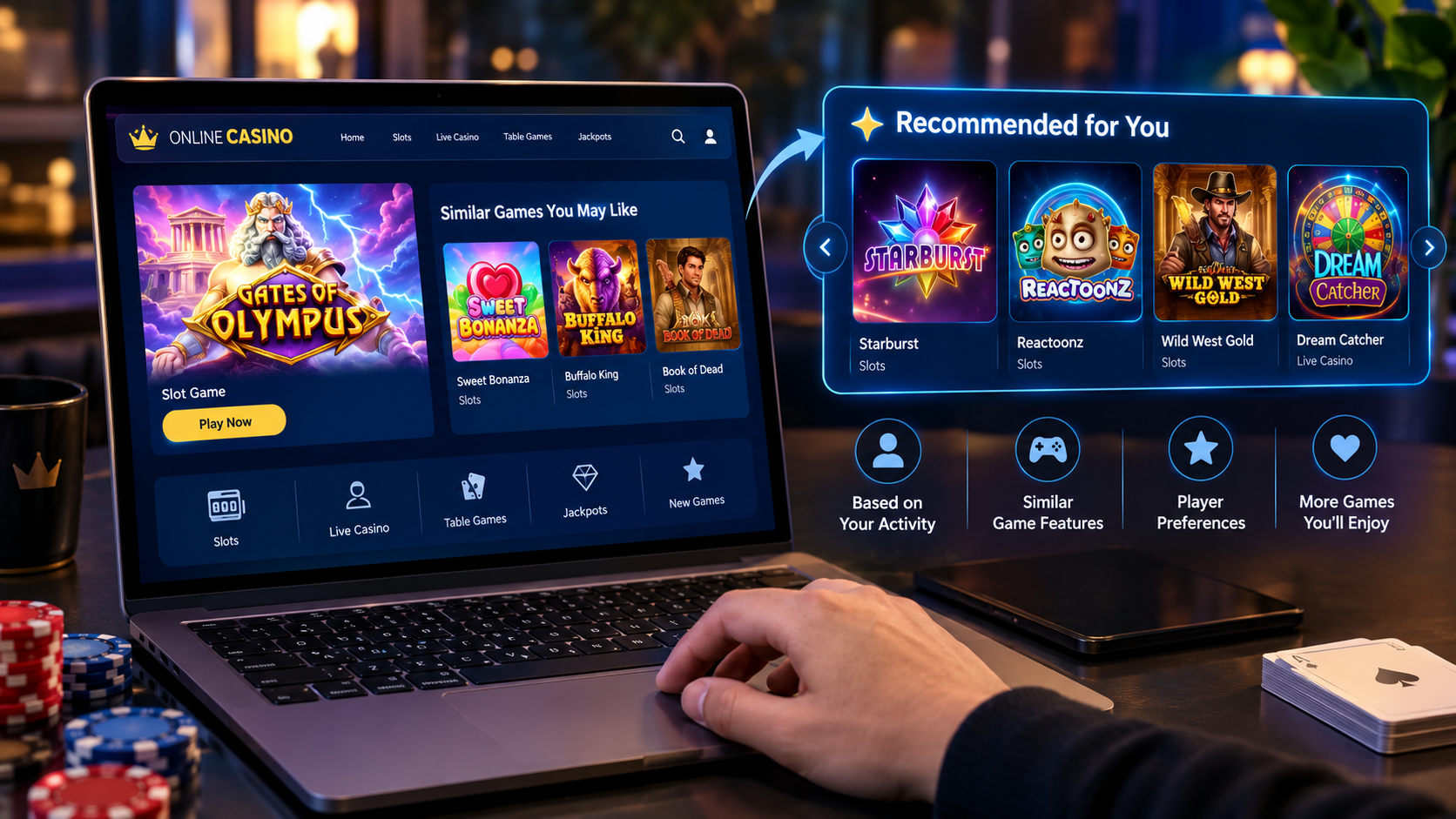
Online casino platforms can offer thousands of games, which can make choosing the right title surprisingly difficult. A player may enjoy a particular slot, table game, or live casino experience but still have no idea what to try next. This is where similar-game recommendation systems become useful.
Instead of showing the same catalogue to everyone, modern casino platforms can use game information and user activity to present titles that have similarities to games a player has already interacted with. The result is a more organised browsing experience and a faster way to find relevant content.
What Are Similar Game Recommendations?
Similar game recommendations are suggestions based on the characteristics of a game or the behaviour of users who play it.
For example, someone playing a particular slot may see recommendations featuring similar themes, mechanics, features, volatility levels, or game providers. A blackjack player might also be shown other table games rather than unrelated slot titles.
Recommendation systems can combine several signals instead of relying on one simple rule. Current iGaming recommendation technologies commonly use game metadata, previous interactions, player preferences and behaviour patterns to rank suitable titles.
The basic idea is simple: if a player enjoys one type of game, the platform can make it easier to find other games with comparable characteristics.
Game Features Help Define Similarity
One of the most important parts of a recommendation system is the information attached to every game.
A casino platform may classify games according to their genre, theme, provider, mechanics, features, volatility and other characteristics. These details give the recommendation engine a way to compare different titles.
For example, two slots may have completely different names but share similar gameplay mechanics and bonus features. A recommendation engine can identify these similarities and place the games closer together in a personalised selection.
Game metadata can also be used to create categories around themes or specific features. Some recommendation systems use attributes such as volatility, game mechanics, themes and providers when ranking games for individual users.
This approach is particularly useful when a casino has a large catalogue because players do not have to manually check hundreds of titles.
Player Activity Can Influence Recommendations
Game information is only one part of the process. User activity can also provide important signals.
When someone repeatedly returns to certain types of games, the platform may identify a consistent preference. A player who regularly chooses live table games, for instance, may receive more recommendations from that category than someone who mainly plays slots.
Similarly, recently played games can become a starting point for recommending other titles. Some systems use phrases such as “Because You Played” or “Players Like You” to present recommendations based on previous activity or users with comparable preferences.
This does not necessarily mean every recommendation is based on a single recent click. More sophisticated systems can consider repeated interactions and broader patterns to create a more useful picture of what a user might prefer.
Collaborative Filtering Adds Another Layer
Another technique used by recommendation systems is collaborative filtering.
Rather than looking only at the features of a game, collaborative filtering considers relationships between users and the games they play. If many users who enjoy one title also tend to play another, that second title may become a recommendation for people with similar activity.
For example, imagine a large group of players frequently choosing the same two or three types of games. When another player demonstrates a comparable pattern, the recommendation system may identify those shared behaviours and suggest relevant titles.
Casino recommendation APIs already use collaborative filtering to generate similar-game suggestions based on interactions between players and games.
This method can be especially helpful for players who have not yet built a long history on the platform.
Recommendations Can Change Over Time
Personalisation is not necessarily static.
A player’s interests can change. Someone may start with classic slots, move toward live casino games and later become interested in table games. A useful recommendation system needs to respond to these changes instead of permanently assigning the same preferences.
Modern recommendation platforms can continuously update rankings as new activity becomes available. This means the games displayed in a “Recommended” or “Similar Games” section can change from one session to another.
Recent industry examples have also used personalised lobby sections and similar-game suggestions after a player exits a game, creating another opportunity to present relevant titles without forcing the user to search through the entire catalogue.
Why Better Recommendations Matter
A large casino catalogue is useful only when users can navigate it efficiently. If every player sees an identical list, relevant games can easily become buried among hundreds of other titles.
Personalised recommendations can reduce this problem by placing potentially relevant games closer to the user’s attention.
For players, the main benefit is convenience. Instead of starting a completely new search, they can receive suggestions connected to something they already enjoy.
For casino operators, better content discovery can also improve the overall user experience and encourage broader interaction with the available catalogue. Recommendation technology is increasingly being used to support engagement, content discovery and personalised journeys.
For readers who want a broader overview of casino categories, game formats and related topics, casino game guides can provide another useful starting point for browsing casino-related content.
Responsible Personalisation Still Matters
Recommendation technology should not be viewed simply as a way to encourage longer sessions. Responsible implementation is equally important.
Personalisation should help users navigate content without creating misleading impressions about winning chances or changing the underlying rules of a game. Recommendation tools should operate separately from certified game mechanics, including the random number generation and advertised game mathematics.
Responsible gambling principles are also important because casino activity can carry risks for some users. The UK Gambling Commission’s recent research continues to examine the relationship between gambling activity and adverse consequences, highlighting why consumer protection should remain part of the wider conversation.
For that reason, recommendation systems are most useful when they improve navigation and relevance while operating within appropriate responsible-gambling and regulatory frameworks.
What the Future of Similar Game Recommendations Looks Like
As casino catalogues continue to grow, recommendation systems are likely to become more sophisticated. Artificial intelligence and machine-learning models can process large amounts of information and identify relationships that would be difficult to manage manually.
Future systems may combine game metadata, behavioural patterns, real-time context and changing preferences to create more accurate recommendations. Instead of simply showing the most popular games, platforms can increasingly focus on which available titles are most relevant to an individual user.
The important point is that personalisation should remain useful rather than overwhelming. A good recommendation system does not need to show dozens of choices. A smaller selection of relevant games may be more valuable than a long list with little connection to the user’s interests.
FAQs
How do online casinos know which games are similar?
They can compare factors such as game type, theme, mechanics, features, provider and volatility. Player interaction data may also be used to identify games that are commonly played by users with similar preferences.
Are recommendations the same for every player?
Not necessarily. Personalised systems can rank games differently depending on a player’s previous activity, preferences and other available signals.
Can recommendations change over time?
Yes. When a player’s interests or activity patterns change, recommendation rankings can also change to reflect newer preferences.
Do similar-game systems change how a casino game works?
No. A recommendation system should only influence how games are presented or suggested. It should not alter the certified rules, RTP or random outcomes of the underlying game.
Why are similar-game recommendations useful?
They can make large casino catalogues easier to navigate by helping users find games that share characteristics with titles they have already viewed or played.
Final Thought
Online casino platforms are moving beyond simple lists of popular games. Similar-game recommendations combine game characteristics, user activity and behavioural patterns to make large catalogues easier to navigate.
When implemented responsibly, these systems can connect players with relevant content without requiring them to search through an enormous number of titles. As personalisation technology develops, recommendation engines are likely to become an increasingly important part of how online casino platforms organise and present their growing game libraries.